📸 Photo Description
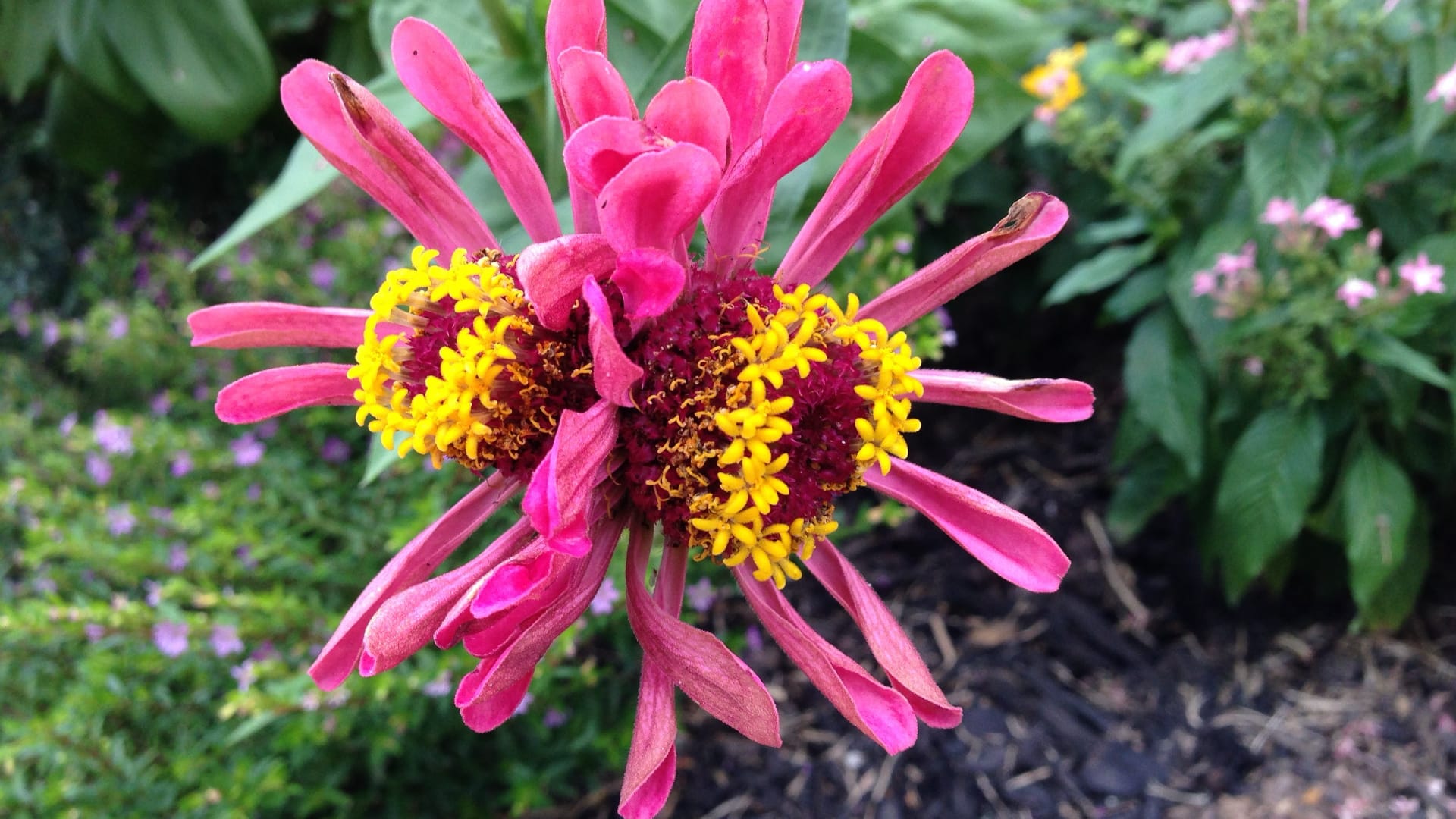
This image shows a bright pink zinnia flower with a distinctive yellow center surrounded by deep red-purple stamens. Unlike many flowers that look exactly the same, this flower displays unique colors and patterns that make it different from other flowers in the garden. Small insects and other flowers can be seen in the background, showing this flower growing among many others in nature.
🔬 Scientific Phenomena
Anchoring Phenomenon: Why do flowers in the same garden look different from each other?
This photograph illustrates genetic variation and inherited traits—the scientific reason that organisms of the same type can look noticeably different. The pink zinnia's unique coloring comes from instructions (genes) passed down from its parent plants. These genetic instructions tell the flower what colors to make. Sometimes small changes happen in these instructions, creating flowers with different colors, patterns, or sizes than their parents. This is why no two zinnias are exactly alike, even when grown in the same garden under the same conditions. This natural variation is the raw material for both natural and human-directed selection.
📚 Core Science Concepts
- Inherited Traits: Plants pass on characteristics to their offspring through seeds. Flower color, shape, and size are traits that come from parent plants.
- Genetic Variation: Individual organisms of the same species have differences because they receive different combinations of instructions (genes) from their parents. This creates biodiversity even within a single plant species.
- Observable Features: Scientists observe and describe the physical characteristics of living things—like petal color, number of petals, and center patterns—to identify and compare organisms.
- Adaptation Through Selection: When people choose plants with desired traits to grow year after year, they can create new varieties. This is how gardeners developed the many bright zinnia colors we see today.
Pedagogical Tip:
Rather than diving straight into abstract genetics, anchor your lesson in this concrete observation: "All the zinnias in this garden came from similar seeds, but they don't all look the same. Why?" This invites students to notice differences before learning the science behind them. Third graders are natural observers—leverage that strength before introducing the concept of genes as "instructions."
UDL Suggestions:
Representation: Provide students with actual flower pictures or real flowers (if available) to examine alongside this photo. Some students benefit from tactile and visual input together. Action/Expression: Allow students to sort flower images by color, petal count, or center pattern—giving kinesthetic learners a way to explore variation. Engagement: Connect to student experience: "Do you look exactly like your siblings or parents? Neither do flowers!"
🎓 NGSS Connections
Performance Expectation:
3-LS3-1: Analyze and interpret data to provide evidence that plants and animals have traits inherited from parents and that variation of these traits exists in a group of organisms.
Disciplinary Core Ideas:
- - Inheritance of Traits
- - Variation of Traits
- - Natural Selection
Crosscutting Concepts:
- - Patterns of inherited traits and variation within populations
- - Genes cause traits; different genes create variation
💬 Discussion Questions
- "If these zinnias grew from seeds in the same garden and were watered the same way, why do you think some are pink and others look different?" (Bloom's: Analyze | DOK: 2)
- "What do you think would happen if a gardener kept planting only seeds from the pinkest zinnias year after year?" (Bloom's: Predict/Evaluate | DOK: 3)
- "How is this flower similar to and different from your own family members?" (Bloom's: Compare/Contrast | DOK: 2)
- "Where do you think the flower's color instructions come from?" (Bloom's: Understand | DOK: 1)
📖 Vocabulary
- Trait: A characteristic or feature of a living thing, like color, size, or shape.
- Inherited: Passed down from parents to children through genes (like eye color in families).
- Variation: Differences among individual organisms of the same type.
- Genes: The tiny instructions inside living things that decide what traits they will have.
- Offspring: Baby plants or animals born from parent plants or animals.
🌡️ Extension Activities
- Flower Observation Hunt: Take students outside to observe flowers in your school garden (or show photos of flowers). Ask them to record observations: "What colors do you see? How many petals? What does the center look like?" Create a class chart showing the variation they find. Discuss why different plants have different traits.
- Seed Sorting & Prediction: Provide zinnia seeds (or other seeds) of different sizes or colors. Have students sort them by observable traits and predict: "Do you think seeds that look different will grow into plants that look different?" Plant them together and observe over weeks.
- Family Trait Detective: Have students draw themselves, then draw a parent or sibling. Compare the pictures to find inherited traits: eye color, hair color, smile shape. Create a poster showing "Traits That Run in My Family" to reinforce that inheritance applies to humans too.
🔍 Zoom In / Zoom Out Concepts
Zoom In: The Microscopic Level – Inside the Genes
Deep inside each cell of this zinnia flower, there are tiny, invisible instructions called genes that are made of a special material called DNA. These genes are so small that we can only see them with a powerful microscope! Think of genes like a recipe card that tells the flower's cells: "Make pink color here" and "Make yellow color in the center." Different zinnias have slightly different recipe cards, which is why they look different. Scientists who study genes use special tools to read these tiny instructions and understand why organisms look the way they do.
Zoom Out: The Ecosystem Level – Flowers in Nature's Community
This single pink zinnia is part of a much larger garden ecosystem. In nature, the variety of flower colors and shapes helps different insects—like bees, butterflies, and beetles—find the food they need. Some insects are attracted to bright pink flowers, while others prefer yellow centers. Because flowers have so much variation (thanks to different genes), there's something for everyone! When gardeners grow many different zinnia varieties together, they're actually creating a mini-ecosystem where different pollinators can thrive. This flower variation is important for keeping the whole garden community healthy and balanced.
🤔 Potential Student Misconceptions
Misconception 1: "Flowers look different because they were planted in different spots or watered differently."
Clarification: While environment does affect how healthy a plant grows, the color of a flower comes from the genes it inherited from its parents, not from where it's planted. Two zinnias planted side-by-side in the exact same soil and sunlight will still have different colors if they came from different parent plants. The environment can make a plant bigger or smaller, but genes decide the color.
Misconception 2: "The yellow center and pink petals are two different kinds of flowers."
Clarification: No! This is all one flower—one organism. Different parts of the same flower can have different colors because different genes control different parts. Just like you might have brown hair but fair skin, the zinnia has pink petals but a yellow center. They're all part of the same flower's inherited traits.
Misconception 3: "If I save seeds from this pink flower, all the new flowers will look exactly the same."
Clarification: The seeds from this flower will grow into zinnias that are similar to the parent, but not identical. The parent flower received genes from two parents of its own, and it mixes those genes in different ways when making seeds. So some baby zinnias might be more pink, some more red, and some might surprise us with a completely new color combination!
🔗 Cross-Curricular Ideas
Math Connection: Sorting & Graphing Flower Traits
Have students collect or look at pictures of different flowers (real or from books). Ask them to sort flowers by color, petal count, or size. Create a bar graph showing how many flowers are pink, how many are yellow, how many are red, etc. This reinforces data representation skills while deepening observation of variation. Students can also count petals on different zinnia flowers and create a chart: "How many petals on each flower?"
Language Arts Connection: "If I Were a Flower" Creative Writing
Students write from the perspective of the pink zinnia: "I am a pink zinnia with a yellow center. My parents were both zinnias, and I inherited pink color from one parent and my yellow center from the other. I wonder what color my baby flowers will be?" This narrative writing exercise helps students understand inheritance in a creative, personal way while practicing descriptive vocabulary about traits.
Social Studies Connection: Plant Breeders & Cultural Gardens
Explain that gardeners and farmers around the world have chosen flowers and crops with specific traits for thousands of years. Different cultures have favorite flowers and food plants! Show pictures of zinnias from different regions or varieties, and discuss: "What colors would you choose if you were breeding flowers for your garden?" This connects to human choices, cultural preferences, and how people work with nature.
Art Connection: Flower Variation Painting
Students paint or draw a series of zinnia flowers (or any flower) all with the same shape but different color combinations. Display them together and discuss: "We all drew the same flower shape, but everyone chose different colors—just like real zinnias!" This helps solidify the concept that variation exists within a species and celebrates individual creativity while teaching science.
🚀 STEM Career Connection
- Horticulturist — Grows and cares for plants on purpose — choosing what will thrive in a particular place.
- Try it: Design a new flower by combining traits from two different flowers, explaining why you chose those traits. (Practice: Constructing explanations and designing solutions)
- Tools: pruning shears, soil test kits, grafting knives, greenhouses
- Where they work: botanical gardens, plant nurseries, city parks, farms and orchards
- Meet one: Carlos Magdalena — How to bring the world's rarest plants back from the edge, including the smallest water lily on Earth after it vanished from the wild.
- Median pay: /year — "Soil and plant scientists"
- Botanist — Studies plants — how they grow, how they reproduce, and how they survive where they live.
- Try it: Explain how a change in a plant's 'instructions' could lead to a flower with a different color. (Practice: Constructing explanations and designing solutions)
- Tools: a hand lens, a plant press, a soil probe, field guides
- Where they work: botanical gardens, herbariums, forests and fields, universities
- Meet one: Robin Wall Kimmerer — Mosses — which she calls the coral reefs of the forest — and what Indigenous knowledge teaches about bringing plants back.
- Median pay: /year — "Soil and plant scientists"
Wage figures are median annual wages for the U.S. occupation named after each one, from the U.S. Bureau of Labor Statistics, Occupational Employment and Wage Statistics (OEWS), national, May 2025. Several careers share one occupation, so their figures match.
---
Teacher Tip: This lesson naturally connects to spring gardening, environmental science, and even art (flower color mixing). Consider inviting students to paint or create flowers with the same shape but different color patterns to solidify their understanding of variation.