📸 Photo Description
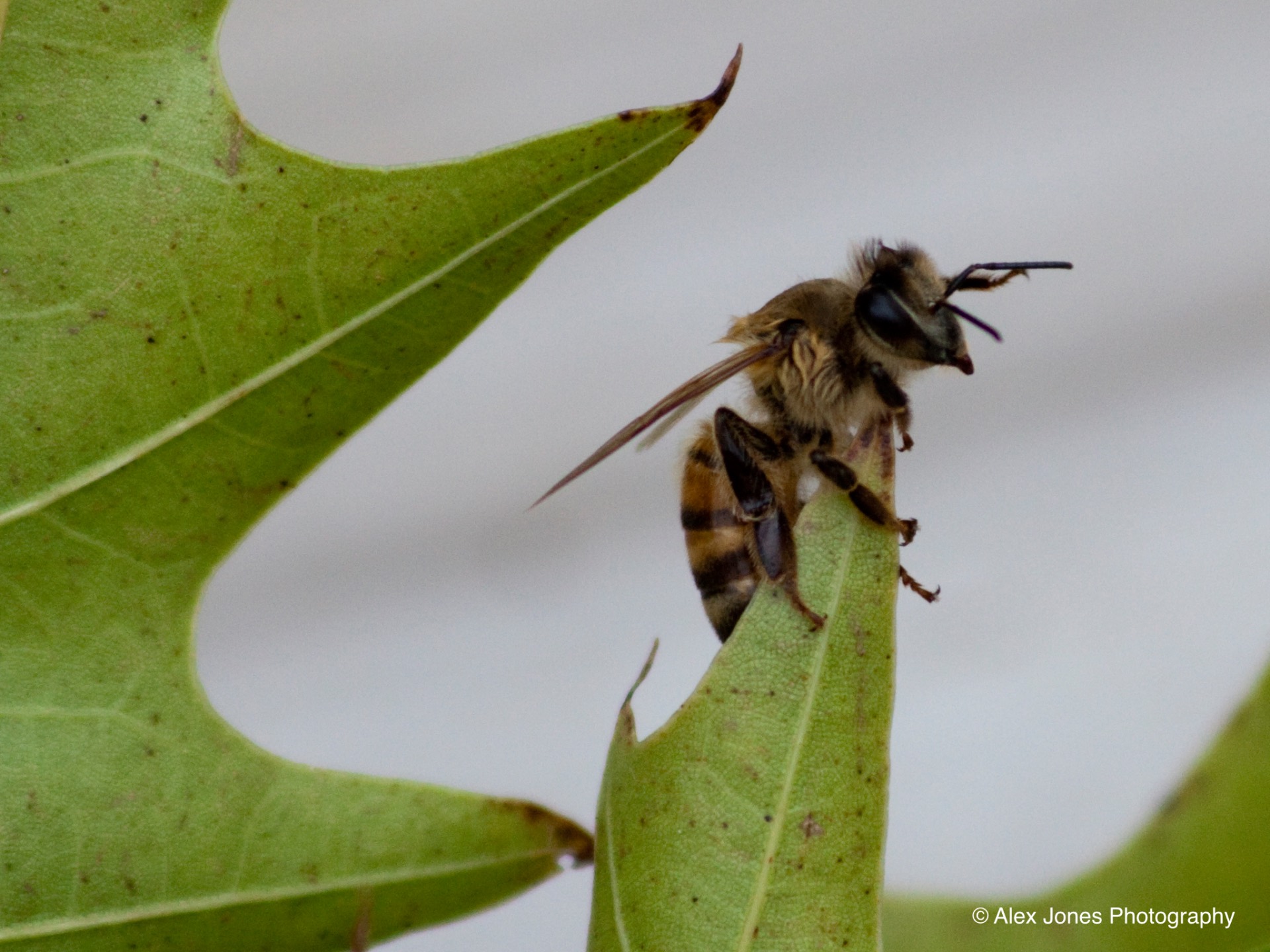
A fuzzy brown and black bee sits on a green leaf with white flower petals around it. The bee has striped patterns on its body and clear wings. You can see the bee's legs gripping the leaf as it rests between the flower petals.
🔬 Scientific Phenomena
The anchoring phenomenon shown is pollination - the process where bees transfer pollen from one flower to another while collecting nectar for food. This happens because bees need energy-rich nectar to survive, and flowers need pollen moved to other flowers to reproduce. As the bee crawls into flowers to drink nectar, pollen grains stick to its fuzzy body and legs, then get brushed off when it visits the next flower. This creates a mutually beneficial relationship where both the bee and the plant get what they need to survive.
📚 Core Science Concepts
- Animal Adaptations: Bees have special body parts that help them survive, including fuzzy hairs that collect pollen, long tongues to reach nectar, and strong wings for flying from flower to flower.
- Plant Life Cycles: Flowers are the reproductive parts of plants that need pollen from other flowers to make seeds and grow new plants.
- Interdependence: Bees and flowering plants depend on each other - bees get food (nectar) while plants get help reproducing through pollination.
- Animal Behaviors: Bees have learned behaviors like communicating with other bees about where to find the best flowers through special dances.
Pedagogical Tip: Use hand motions and role-playing to help students understand the bee-flower relationship. Have some students be "bees" and others be "flowers" to act out pollination in a kinesthetic way.
UDL Suggestions: Provide visual supports like diagrams showing bee body parts, and offer multiple ways for students to demonstrate understanding through drawing, modeling with clay, or verbal explanations.
🔍 Zoom In / Zoom Out Concepts
Zoom In: At the microscopic level, tiny pollen grains (like plant sperm cells) are sticking to the bee's branched hairs and being transferred to the female parts of flowers where they can fertilize eggs to create seeds.
Zoom Out: This bee is part of a larger ecosystem where pollinators help maintain food webs. Without bees and other pollinators, many plants couldn't reproduce, which would affect all the animals that eat those plants and the predators that eat those animals.
🤔 Potential Student Misconceptions
- Misconception: Bees are trying to help plants on purpose.
Clarification: Bees are actually just trying to get food for themselves - the pollination happens accidentally as they collect nectar.
- Misconception: All bees make honey and live in hives.
Clarification: Many bees are solitary and don't make honey - they just collect nectar and pollen for their own babies.
- Misconception: Bees only visit one type of flower.
Clarification: Most bees visit many different kinds of flowers, which helps them find food and helps plants get pollinated.
🎓 NGSS Connections
Performance Expectation: 3-LS4-3 - Construct an argument that some animals form groups that help members survive.
Disciplinary Core Ideas:
- - Being part of a group helps animals obtain food, defend themselves, and cope with changes
- - Reproduction is essential to the continued existence of every kind of organism
Crosscutting Concepts:
- - Students can observe how bee behavior causes pollination effects
- - Bees and flowers work together as parts of an ecosystem
💬 Discussion Questions
- What do you notice about the bee's body that might help it collect pollen? (Bloom's: Analyze | DOK: 2)
- How do you think the relationship between bees and flowers helps both organisms survive? (Bloom's: Evaluate | DOK: 3)
- What might happen to a garden if all the bees disappeared? (Bloom's: Predict/Apply | DOK: 2)
- Why do you think flowers are often bright colors and smell sweet? (Bloom's: Analyze | DOK: 2)
📖 Science Vocabulary
- Pollination: The process of moving pollen from one flower to another to help plants make seeds.
- Nectar: Sweet liquid inside flowers that bees drink for energy.
- Pollen: Tiny grains that flowers need to share with other flowers to make seeds.
- Adaptation: Special body parts or behaviors that help animals survive in their environment.
- Interdependence: When different living things need each other to survive.
🔗 Cross-Curricular Ideas
- Math - Data Collection & Graphing: Have students observe flowers in a garden or schoolyard and tally how many bees visit different types of flowers over a week. Create a bar graph showing which flowers attracted the most bees. This connects to measurement, counting, and data representation.
- ELA - Informative Writing: Students write a "Day in the Life of a Bee" from the bee's perspective, describing what the bee sees, does, and experiences while visiting flowers. This builds narrative writing skills while reinforcing understanding of pollination and bee behavior.
- Art - Nature Illustration: Students create detailed drawings or paintings of bees and flowers, focusing on the specific body parts they've learned about (fuzzy hairs, long tongue, legs). This can include labeling parts, connecting science knowledge with fine motor skill development.
- Social Studies - Community Helpers: Invite a local beekeeper or pollinator expert to visit the classroom to discuss how they help plants and communities. Students can learn about different jobs related to agriculture, gardening, and environmental protection in their local area.
🚀 STEM Career Connection
- Beekeeper — Keeps honey bee colonies healthy, and moves them to where crops need pollinating.
- Try it: Design a simple 'bee hotel' using craft sticks and tubes to provide a safe place for solitary bees. (Practice: Constructing Explanations and Designing Solutions)
- Tools: a bee suit, a smoker, hive frames, a hive tool
- Where they work: apiaries, orchards and farms, beekeeping supply businesses, research stations
- Meet one: Sammy Ramsey — The parasitic mite that is killing honey bee colonies around the world.
- Horticulturist — Grows and cares for plants on purpose — choosing what will thrive in a particular place.
- Try it: Choose three different types of flowers and explain why they would be good choices for attracting bees based on their color and shape. (Practice: Constructing Explanations and Designing Solutions)
- Tools: pruning shears, soil test kits, grafting knives, greenhouses
- Where they work: botanical gardens, plant nurseries, city parks, farms and orchards
- Meet one: Carlos Magdalena — How to bring the world's rarest plants back from the edge, including the smallest water lily on Earth after it vanished from the wild.
- Median pay: /year — "Soil and plant scientists"
Wage figures are median annual wages for the U.S. occupation named after each one, from the U.S. Bureau of Labor Statistics, Occupational Employment and Wage Statistics (OEWS), national, May 2025. Several careers share one occupation, so their figures match.